
A colorful perspective of a hero city 30 years later
Thirty years after the war, it may be time to take Vukovar’s narrative in a different direction. Or at least a broadening of the focus on confrontations with the political manipulators of the city’s bloody past. After 87 days of siege during the Balkan war, the city of Vukovar has anchored itself in the worlds’ collective memory with the identity of a hero city.
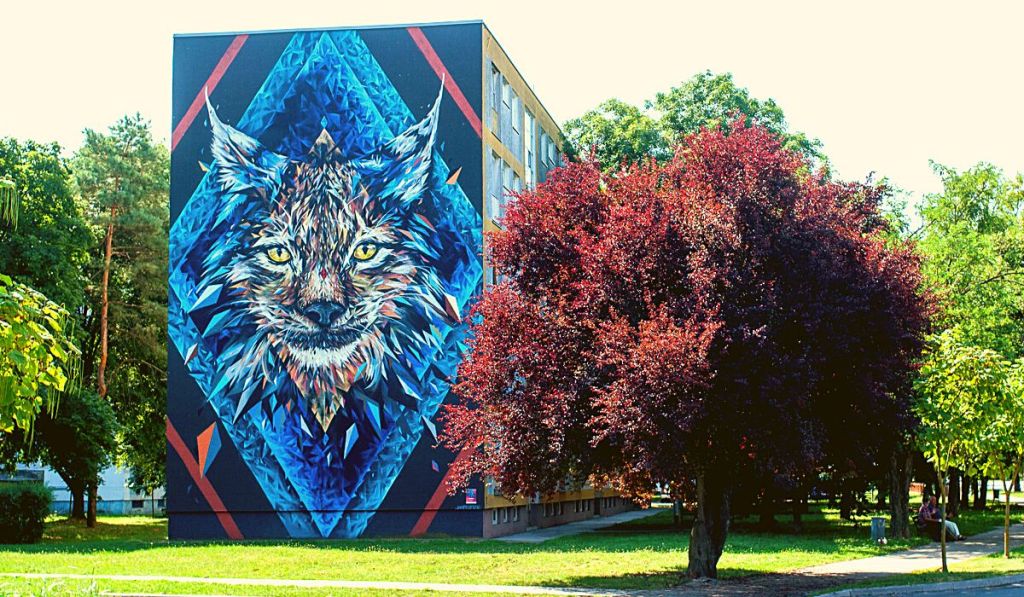
Believe it or not, the little town on the Vuka and Danube rivers is becoming a small Slavonian urban diamond and, with its traditional Slavonian hospitality, will sooner or later once again attract a profile of visitors interested in more than (just) war tourism.
We present you the annual Vukovar’s late spring multicultural festival, launched with the support of the local community and additional European funding, which is demonstrating multiplier effects of investing public and private resources in cultural and artistic content.
What is VukovART?
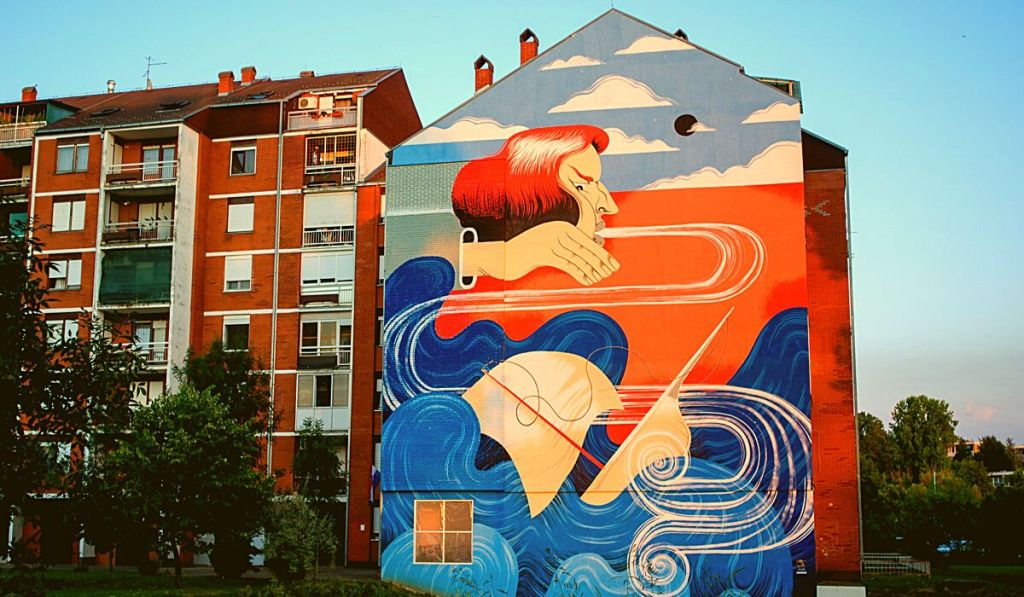
The city’s street art festival VukovART, descriptively called the Art Harbour, took place for the fifth time this year in late spring. An unintentional trigger of new artistic movements in Croatian Slavonia (a related project is also taking place in Sisak, under the name Re:Think Sisak), with the concept of changing the visual identity of the city by means of murals, or large format paintings on building exteriors and other urban surfaces of the city.
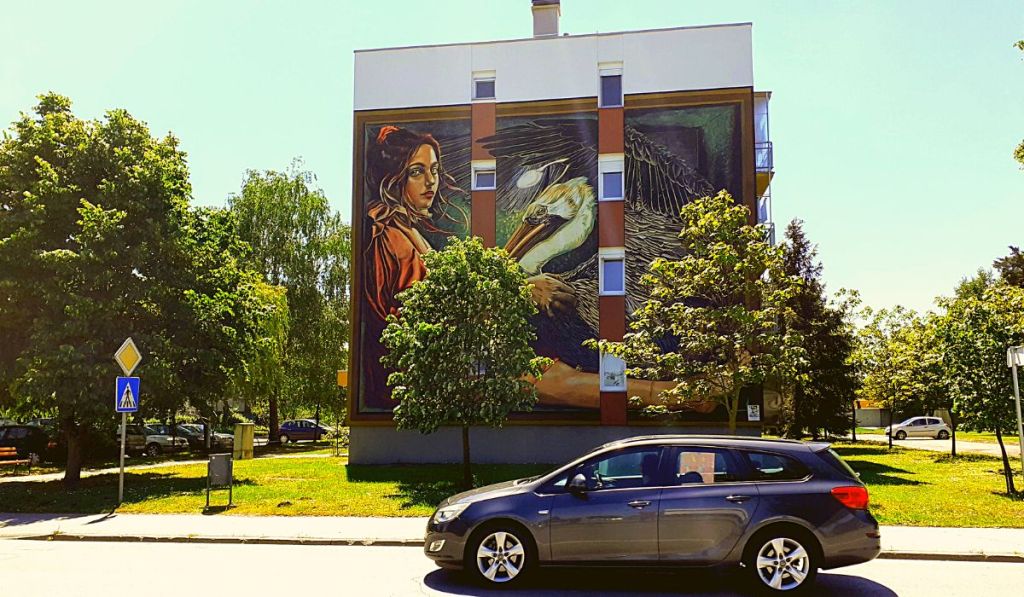
World-class muralists create between five and ten new murals in Vukovar every year, bringing it to life with freshness and color, and turning the whole city into an open-air gallery. They make life more pleasant for the citizens and transform the city into a tourist magnet, with a focus on urban exploration tourism.
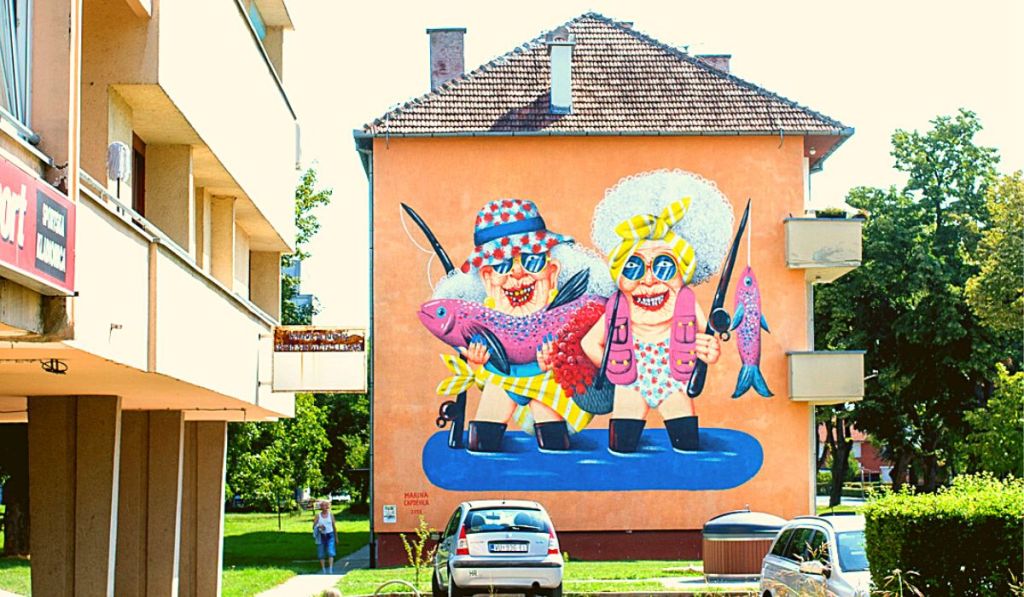
The current map of the city’s locations on the project’s website presents the current 33 large-scale murals, an enviable presence of wall art by world-renowned artists. Each individual work is unique and monumental artistic artefact, meaningfully and aesthetically interwoven into the surroundings of its creation.
The painted building exteriors of the city redefine the visual identity of the city and create a new, attractive, youthful and mischievous tourist and cultural offer of Vukovar year after year. The accompanying month-long festival programme in the streets and squares includes kindergartens and schools, a children’s programme, numerous exhibitions and workshops, circle debates, movies and literature programme, panel discussions, lectures, concerts, even bike races and small running marathons.
The citizens of Vukovar identify with their young and attractive festival, they see it as an agent of change, and the city’s structures perceive its positive effects on other sectors, in particular hospitality and tourism.

Filip Mrvelj and the beginnings of VukovART
The story of VukovART begins with Filip Mrvelj, a self-taught artist of large-scale anamorphic three-dimensional paintings. A Slavonian who emigrated from his native Slavonski Brod and traveled around the world to art events and festivals with his fellow guild members, he gained practical experience that led him to the Guinness Book of World Records with the world’s longest anamorphic three-dimensional mural.
His artistic specialty is anamorphic paintings of large proportions that encourage interaction with the viewers, or audience. These are three-dimensional illusions that open up in front of the viewers at a certain angle, most often through the lens of a camera, video camera or mobile phone, breaking the monotony of urban surfaces. The painting comes alive in front of the viewers, triggering an effect of surprise, delight, even shock.
In 2016, at the invitation of the Vukovar’s city authorities, he painted an interactive three-dimensional painting on the bridge over the Vuka River, which immediately became a hit on social media, in the media and on tourist portals. A year later, with Krešimir Herceg and colleagues from NGOs and city structures, Vukovar started to receive European funding to transform the city’s promenades and the exteriors of apartment blocks and other buildings into canvases for muralists from all over the globe.
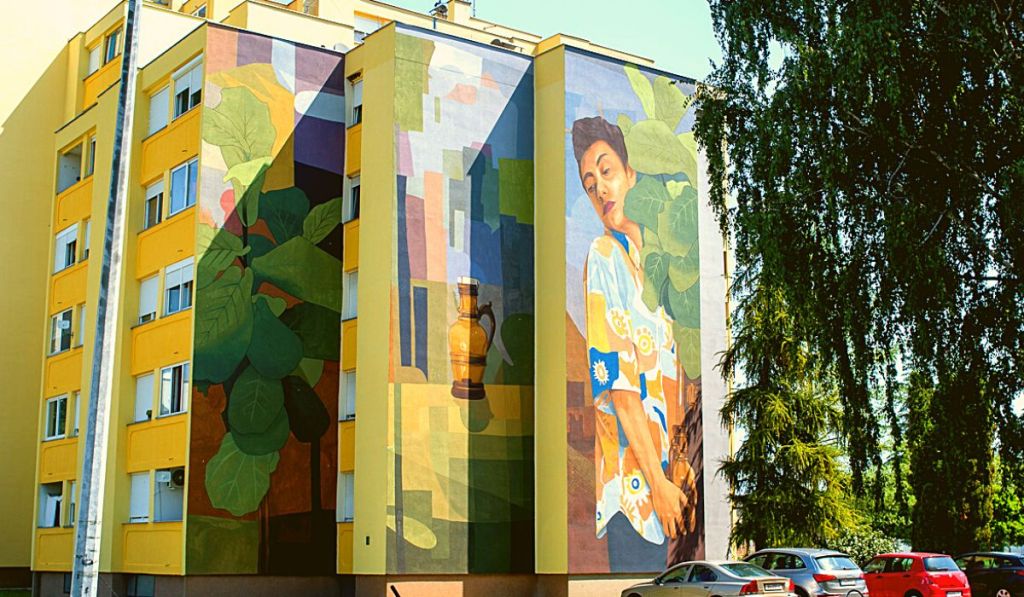
Why does the city benefit?
Street art and art in public space are essential parts of a city’s identity, as they are the universal language of communication with passers-by, local residents and visitors.
A city enriched with street art portrays itself as an active, diverse, free, open and creative city that values the artistic voice of its inhabitants and encourages their expression also in public spaces. Whether interesting, attractive, imposing or monumental, it is a tourist magnet, while its urban expression helps to define the sense of community and identity of the city.
Urban murals enhance the external appearance of urban areas and architectural elements, they add a touch of color and inspiration to the quality of life of residents, and they allow artists to push the boundaries of artistic expression.
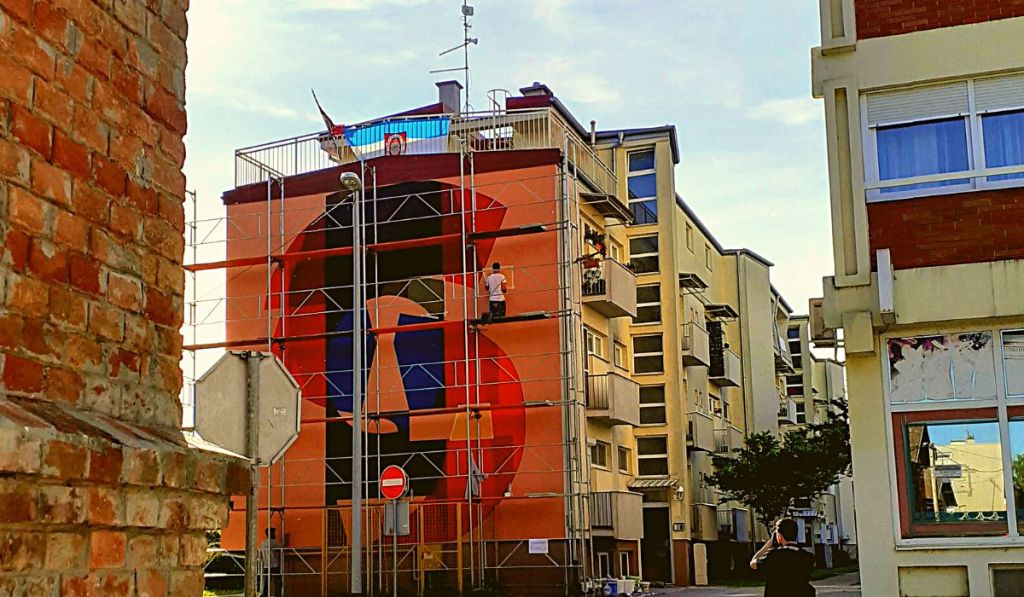
By spreading the urban trend of (re)creating cities and making murals sustainable, they become embedded in the collective unconscious, the inhabitants emotionally connect with them, internalise them in their mental image, consequently develop pride and a sense of (co-)responsibility for the image of the city and contribute to the sustainable (communal) use of public spaces.
The biggest obstacle to the process is the involvement of local communities to maximise the potential impact that this type of project can generate, or the lack of clear and persistent efforts at the city level to facilitate the accomplishment of the project (financial resources, unregulated building ownership, permits, logistics, material resources and, last but not least, promotion in cooperation with the city’s tourism structures).

By increasing the attractiveness and livability of neighborhoods, especially if the murals reflect the local context of the neighborhoods and the history of the city, their creative spark can trigger additional community events and, by attracting tourists, increase their economic viability. Public art and culture projects dynamically tap into the inner energy of the community (the city), which automatically triggers new dialogues and connections.
Stimulating urban creativity and innovation quickly leads to a leap in thought and action in terms of social and economic development. The importance of such city projects in building public trust in city structures should not be forgotten.
Vukovar is also aware of this.
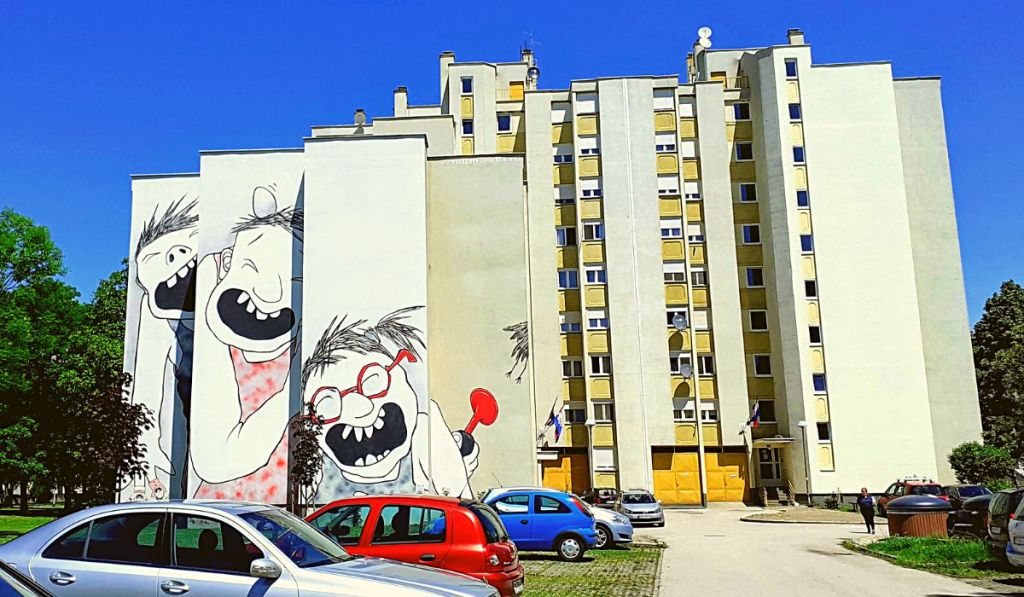
When asked about the strategy of the Vukovar project, Siniša Mitrović from the Office for Social Activities of the City of Vukovar replies:
“From the point of view of the city administration – someone has to dedicate and work on the project, and one person is enough to follow it administratively and logistically throughout the year. Secondly, it is important to have a mayor who has the courage and the vision to bring something new to his environment and to trust the above-mentioned staff member and the team he is working with. (Luckily for us, we have one.) VukovArt is one of the city’s three tourism backbones – the historical part with the Baroque core and the museums is one story, the second story is war tourism and the third is cultural tourism – a contemporary story. We are developing all three at the same time.”
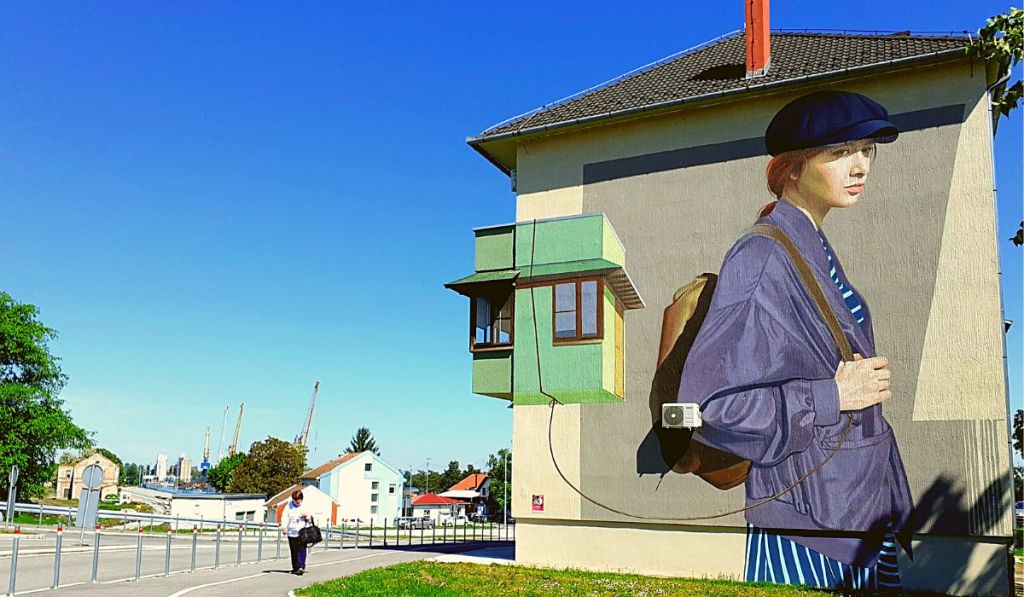
So what does a project of this scale need to flourish?
The right partners from the city authorities, start-up funding and the enthusiasm of an implementation team. Examples of good practice show that the process often depends on the enthusiasm of individuals or a small group, and does not have a long-term development strategy at the outset, only an undefined vision or (related) example.
The process of revitalising the city (through murals or otherwise) is a process that is mostly initiated from the bottom up and needs continuous listening, help, recognition and support from the top down to be successful, continuous and (self-)sustaining. A city policy that does not recognize the initiatives of its own capable, autonomous, ambitious and engaged citizens, who produce cultural art projects as drivers of urban renewal and economy, with satisfied responses from creators, visitors and residents, will not have the lasting trust of the population, nor the future electoral support.
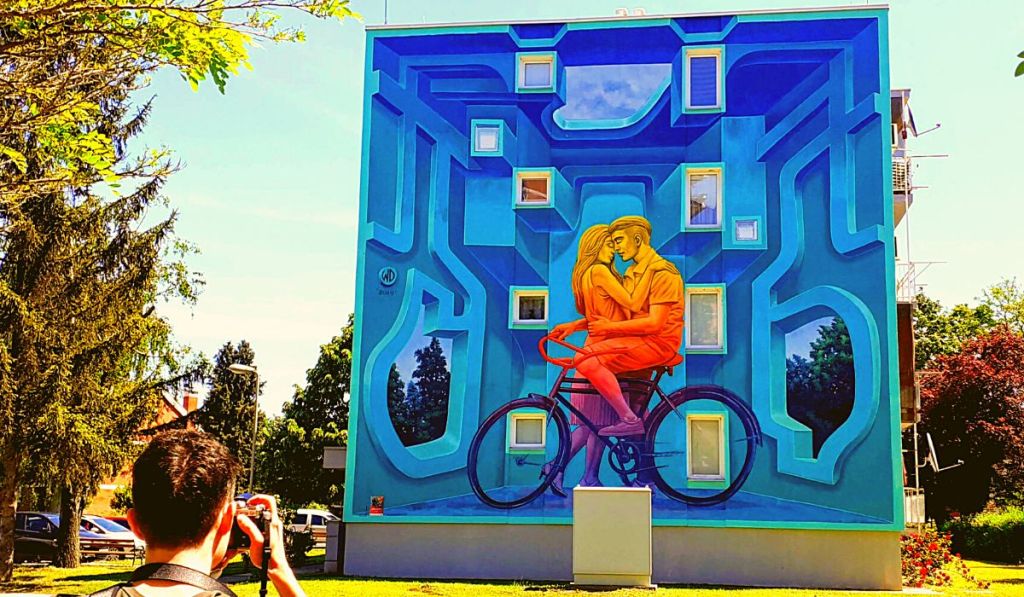
Vukovar does not forget its bloody history, it respects it with all the reverence it deserves, as it is part of its identity. Rebuilt after the aggression, the hero city is rising from the ashes into a youthful, colorful and vibrant town with murals, numerous children’s playgrounds and play areas, landscaped promenades and cycle paths.
Welcome to Vukovar
A city where the value of every euro spent on cultural tourism is enhanced by gratitude, pleasant words and the knowledge that the guest could have spent that euro anywhere else, especially during the peak tourist season in Croatia. Let it enchant you and visit Vukovar from late spring to late summer, where the transformative power of culture and art is creating and painting its new face, its new identity.
originally written in Slovene for local newspaper Večer, 2021
Related posts
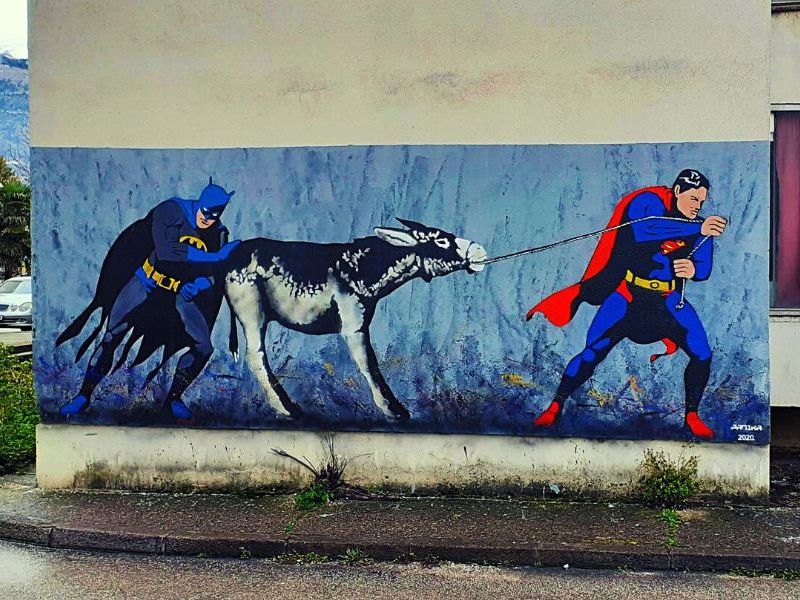
Mostar Street Art Festival: Transforming Ruins into Urban Art Masterpieces
Mostar, a multicultural town in Bosnia and Herzegovina, is regenerating after its destruction during the Balkan wars, largely thanks to its vibrant street art scene. The Street Art Festival Mostar has created an internationally recognized platform which not only produces stunning murals but also includes street performances, concerts, workshops, and exhibitions.

 Tanja Cvitko